
The digital landscape has shifted. Just a few years ago, the novelty of clicking a button to “spin” a paragraph was enough to satisfy the average student. But as we move through 2026, the honeymoon phase with basic AI paraphrasers has officially ended. Academic standards have evolved, and the tools that once seemed like a shortcut are now being recognized for what they truly are: blunt instruments in a world that requires a scalpel.
Students today are smarter about their digital footprint. They realize that while a machine can swap a synonym, it cannot grasp the nuance of a persuasive argument or the subtle tone required for a high-level thesis. This realization is driving a massive migration toward expert-led refinement—a process where human insight takes the lead to ensure quality, integrity, and depth.
The Limitations of Automated Paraphrasing
The primary issue with basic AI tools is their lack of contextual awareness. Most free or low-cost paraphrasers operate on probability. They predict which word might replace another based on frequency, not meaning. This often results in “word salad”—sentences that are grammatically correct but logically hollow.
In a competitive academic environment, “good enough” is no longer the standard. Professors are now equipped with sophisticated detection tools that identify the predictable patterns of AI-generated text. When a student relies solely on an automated tool, they risk losing their unique voice. This is where a professional essay helper becomes invaluable. Experts don’t just change words; they restructure ideas to ensure the core message remains powerful and authentic.
Why “Expert-Led” is the New Gold Standard
Expert-led refinement isn’t just about fixing grammar. It’s about Experience and Authoritativeness. When a human specialist reviews a piece of writing, they bring years of subject-matter knowledge to the table. They understand the specific jargon of a field, the expectations of a particular grading rubric, and the flow of a logical proof.
- Nuance and Tone: An AI doesn’t know the difference between a formal lab report and a reflective essay. An expert does. They can adjust the “temperature” of the writing to match the intended audience.
- Logical Flow: Machines struggle with transitions. They can rewrite a sentence but often fail to connect it to the paragraph that follows. Human editors ensure that every point builds toward a convincing conclusion.
- Fact-Checking: AI is notorious for “hallucinating” or creating facts that sound plausible but are entirely false. Expert editors serve as a secondary filter, verifying that the data supporting your work is accurate and trustworthy.
The Evolution of Academic Integrity in 2026
Educational institutions have reached a turning point. In 2026, the focus has moved away from “policing” software and toward rewarding Helpfulness and Trustworthiness in student submissions. Educators want to see a student’s thought process.
Using a basic paraphraser often strips away the “Experience” factor—the personal insight that makes an essay stand out. By choosing expert-led refinement, students are making a conscious decision to prioritize quality. They are collaborating with essay writers who help them polish their original thoughts rather than replacing them with generic, machine-generated alternatives.
Breaking the “Uncanny Valley” of Writing
There is a concept in robotics called the “uncanny valley,” where something looks almost human but is just “off” enough to be unsettling. AI writing has hit that same wall. We have all read text that feels cold, repetitive, or strangely distant.
Students are moving away from this because they want their work to resonate. Whether it is a personal statement for medical school or a deep dive into macroeconomics, the goal is to connect with the reader. Expert refinement injects personality back into the prose. It turns a mechanical sequence of sentences into a narrative that has rhythm and pulse.
Practical Benefits of the Human-Expert Model
The shift isn’t just philosophical; it’s practical. Students are busy. They juggle jobs, internships, and heavy course loads. While an “essay typer” might provide a starting point or a rough draft, the final polish requires a human touch to ensure the work meets 2026’s rigorous standards.
- Customization: Experts tailor the feedback to your specific needs. If you struggle with introductions, they focus there. If your citations are messy, they clean them up.
- Skill Building: Working with an expert is a learning experience. By seeing how a professional refines your work, you become a better writer over time.
- Confidence: There is a certain peace of mind that comes from knowing a human pair of eyes has vetted your work. It eliminates the anxiety of “Will the AI detector flag this?” or “Does this even make sense?”
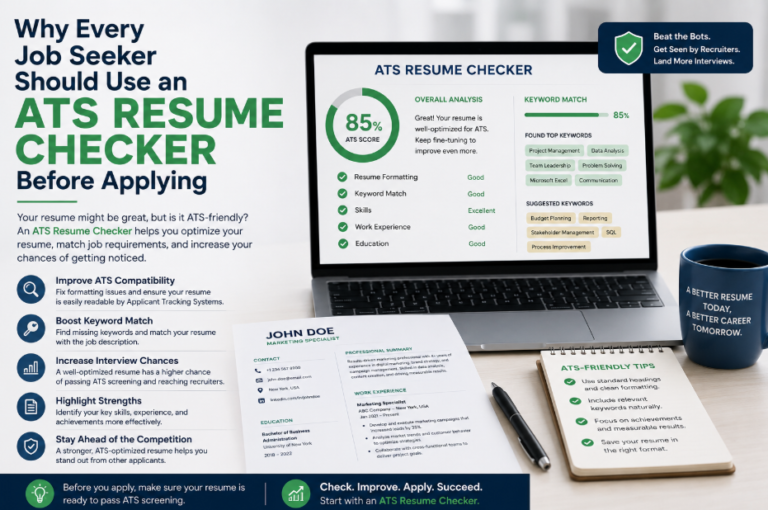
See also: Why Every Job Seeker Should Use an ATS Resume Checker Before Applying
The Future is Collaborative, Not Automated
As we look further into the decade, the divide between automated shortcuts and professional refinement will only grow. The students who succeed will be those who treat technology as a tool for drafting but rely on human expertise for the final execution.
The move toward expert-led refinement is a sign of a maturing digital culture. It shows a respect for the craft of writing and an understanding that some things—like critical thinking and emotional intelligence—simply cannot be automated. When the stakes are high, the choice becomes clear: don’t just paraphrase it; perfect it.
Conclusion
The transition we are witnessing in 2026 marks a return to quality. While basic automation offered a temporary fix for tight deadlines, the long-term value of a student’s academic reputation relies on the depth and accuracy of their work. Moving away from robotic, predictable paraphrasing isn’t just about avoiding detection; it is about embracing a higher standard of communication.
By choosing expert-led refinement, students ensure their ideas are presented with the precision they deserve. This collaborative approach combines the speed of modern tools with the indispensable wisdom of seasoned professionals. As the academic world continues to prioritize authentic, high-value content, the decision to invest in human expertise remains the most effective strategy for success. In the end, a machine can arrange words, but only an expert can craft a masterpiece.